Singapore E-Waste Recycling Guide: Phones, Batteries & Laptops
Where and how to recycle common e-waste in Singapore, including phones, laptops, batteries, lamps and larger electronics.
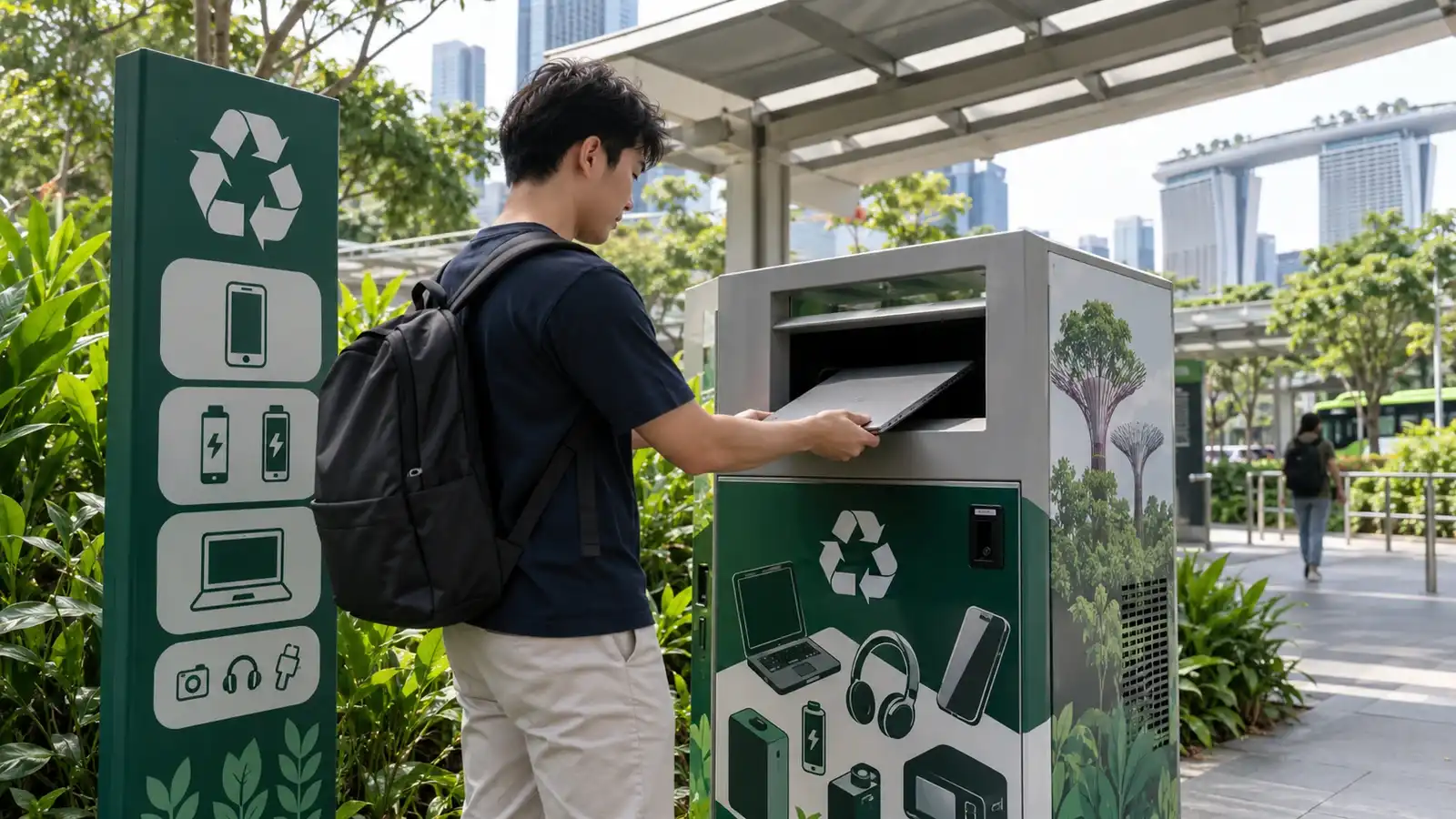
Editorial illustration: The Singapore Best
- Best for
- Phones, laptops, tablets, batteries, lamps and regulated household electronics
- Small devices
- Use approved e-waste bins, retailer collection points or ALBA collection drives
- Batteries
- Do not use general or blue recycling bins; tape rechargeable battery terminals before recycling
- Large appliances
- Use retailer one-for-one take-back, approved collection drives or other regulated channels
- Check before going
- Confirm the collection point accepts your exact device type and size
Singapore has a regulated e-waste collection system for common electronics such as phones, laptops, batteries, lamps and larger household appliances. The safest route is to use an approved collection point or take-back channel rather than putting electronics into general recycling bins.
Key Takeaways
- Singapore has a regulated e-waste collection system for common electronics such as phones, laptops, batteries, lamps and larger household appliances.
- NEA lists public e-waste collection points across Singapore, including ALBA 3-in-1 bins, retailer collection points and collection drives.
- Do not put batteries into general waste or blue recycling bins.
Where can you recycle phones and laptops?
NEA lists public e-waste collection points across Singapore, including ALBA 3-in-1 bins, retailer collection points and collection drives. Smaller ICT devices must fit the opening of the relevant bin.
How should batteries be recycled?
Do not put batteries into general waste or blue recycling bins. NEA advises taping the terminals of rechargeable batteries to reduce short-circuit and fire risk, and sealing leaking batteries before disposal.
What about large appliances?
Regulated large appliances such as refrigerators, washing machines and televisions can be handled through retailer take-back, ALBA doorstep collection and other approved channels. Retailers must provide free one-for-one take-back of the same product type when delivering a new regulated product.
Can every e-waste bin take every device?
No. Different bins accept different categories. Some accept ICT equipment, batteries and lamps only, while larger or unusual electrical items need a depot, collection drive or specialist recycler.
What should you do before recycling a device?
Back up anything important, sign out of accounts and erase personal data where possible. Remove SIM and memory cards, and keep batteries attached only when the device is designed that way.
Where to check the nearest point
Use NEA’s e-waste map for the latest collection locations and accepted-item rules before travelling with a bulky device.
What counts as regulated e-waste?
Singapore's regulated collection system covers several common categories, including ICT equipment such as computers, laptops, mobile phones, tablets, printers and power banks; large household appliances such as refrigerators, washing machines, dryers, televisions and air-conditioners; as well as specified batteries, bulbs and lamps. The correct channel still depends on the item and its size.
Small household appliances such as rice cookers, kettles or vacuum cleaners are not automatically accepted in every ALBA bin. NEA lists separate voluntary or specialist recycling channels for some of these items, so check the accepted-item list before carrying an appliance to a collection point.
Free collection for large household appliances
NEA states that ALBA has provided free doorstep collection for large household appliances at residential premises since 1 January 2025. This is separate from retailer one-for-one take-back, which applies when a new regulated product of the same type is delivered. HDB residents may also use their Town Council's bulky-item service for eligible large e-waste.
For a replacement purchase, retailer take-back is often the simplest option because the old appliance can be removed when the new one arrives. If you are not buying a replacement, check ALBA's current doorstep-collection instructions or an upcoming collection drive.
Data and battery safety before recycling
- Back up files and complete a factory reset where appropriate.
- Remove SIM cards, memory cards and any removable storage you intend to keep.
- Sign out of accounts and disable device-tracking locks before handing over a reusable device.
- Tape exposed battery terminals where NEA advises it, and isolate leaking batteries in a leak-proof bag or container.
- Never place loose batteries or electronics in the blue household recycling bin.
For larger household items, see our bulky-item disposal guide ; homeowners planning works may also need the HDB renovation-rules guide .