Bulky Item Disposal Singapore: HDB, Appliances & Free Take-Back
How to dispose of bulky furniture and large appliances in Singapore, including Town Council help, retailer take-back and e-waste options.
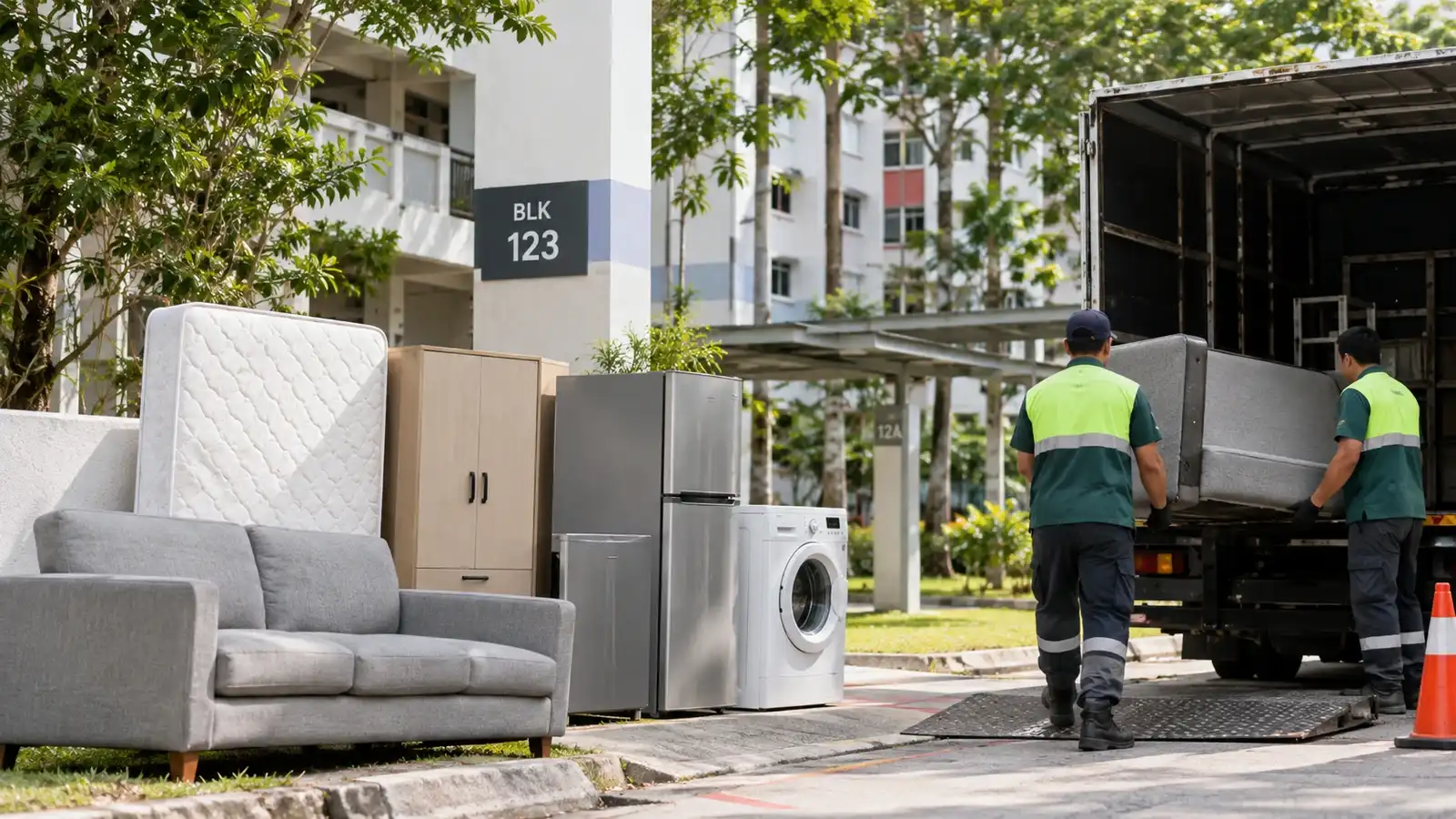
Editorial illustration: The Singapore Best
- HDB furniture
- Contact your Town Council for bulky-item removal arrangements
- Large appliances
- Use approved e-waste routes such as ALBA or retailer take-back
- Retailer take-back
- Free one-for-one take-back applies to regulated products of the same type on delivery of a new one
- Private housing
- Use your Public Waste Collector or a licensed waste collector for non-appliance bulky items
- Before disposal
- Donate or resell usable items; erase personal data from electronics
Bulky-item disposal in Singapore depends on what you are throwing away and where you live. Furniture, large appliances and regulated e-waste can have different collection routes, so leaving items beside a bin is not the right default.
Key Takeaways
- Bulky-item disposal in Singapore depends on what you are throwing away and where you live.
- NEA directs HDB residents to their Town Council for details on bulky-item removal such as tables, chairs, cupboards and mattresses.
- Large household appliances are part of Singapore’s regulated e-waste system.
How do HDB residents dispose of bulky furniture?
NEA directs HDB residents to their Town Council for details on bulky-item removal such as tables, chairs, cupboards and mattresses. Collection arrangements and limits can differ by Town Council.
What about large appliances?
Large household appliances are part of Singapore’s regulated e-waste system. NEA points residents to ALBA’s collection services, while retailers must provide free one-for-one take-back of a regulated product of the same type when delivering a new one.
Can you leave bulky items at the bin centre?
Do not assume that any large item can simply be left at a common bin area. Check your Town Council’s instructions first so collection is arranged properly and does not obstruct shared spaces.
What if you live in private housing?
For private estates, NEA says residents can contact the Public Waste Collector serving the estate for non-appliance bulky items, usually for a separate fee, or engage a licensed waste collector.
What should be donated instead?
If furniture or electronics are still safe and usable, donation or resale can be a better option than disposal. For electronics, erase personal data before handing a device to another person.
Best way to avoid a wasted trip
Check the Town Council, retailer or approved e-waste operator before moving a bulky item downstairs. The correct channel depends on the item type and estate.
Bulky-item disposal decision tree
Start with the item rather than the nearest bin. If it is still safe and usable, consider donation or resale. If it is furniture and you live in an HDB estate, check your Town Council's bulky-item service. If it is a regulated large appliance, use an approved e-waste route such as retailer take-back or ALBA. If you live in private housing and the item is not a regulated appliance, contact the Public Waste Collector serving your estate or a licensed waste collector.
This simple sorting step prevents the most common problem: moving a heavy item downstairs before confirming that the collection service will accept it.
What does one-for-one retailer take-back mean?
For regulated consumer products, retailers provide free take-back of an unwanted product of the same type when delivering a new one. In practice, that means a new washing-machine delivery can be paired with removal of an old washing machine. It is not a general free-removal service for unrelated furniture or extra household items.
Arrange the take-back when ordering, especially if the old appliance needs to be disconnected or moved through a narrow access route. If you are not buying a replacement appliance, NEA points residents to ALBA and other approved collection options.
Before the collection day
- Confirm the service accepts the exact item and quantity.
- Book a collection slot where the Town Council, retailer or waste collector requires one.
- Do not block corridors, lift landings, fire-escape routes or common areas while waiting for collection.
- For electronics, erase personal data and remove storage media you intend to keep.
- For private estates, confirm any collection fee before the item is moved.
For electronics, check the accepted channels in our Singapore e-waste recycling guide . If disposal is part of a remodel, also review the HDB renovation-rules guide .
Sources
Primary sources used for this guide: