Singapore Recycling Guide: What Can Go in the Blue Bin — and What Cannot
Singapore’s blue recycling bins accept clean paper, plastic, glass and metal, but contamination and wrong items can spoil otherwise recyclable material.
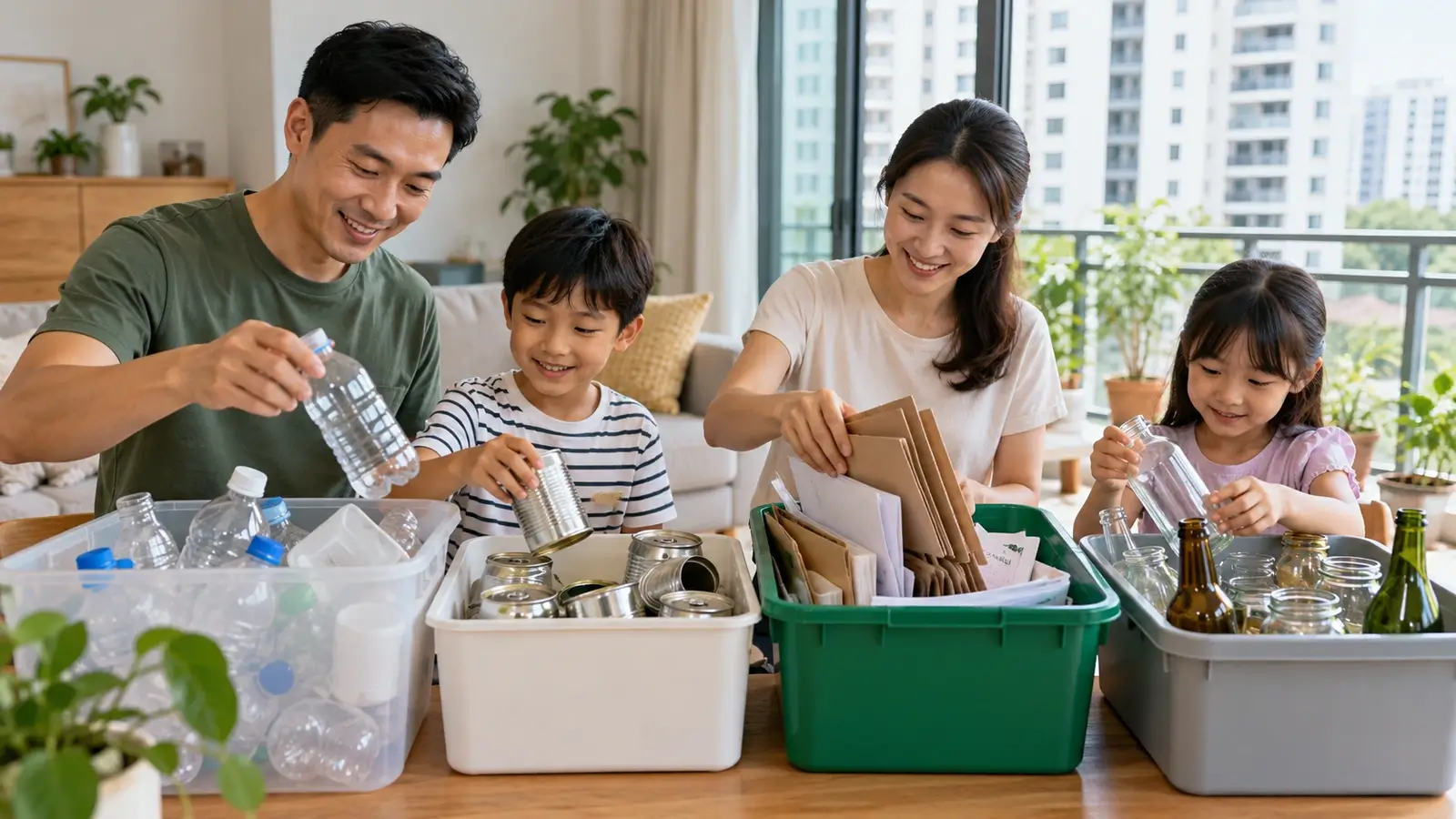
Singapore’s blue recycling bins accept clean paper, plastic, glass and metal, but contamination and wrong items can spoil otherwise recyclable material.
- Blue-bin materials
- Paper, plastic, glass and metal
- Condition
- Clean and free of food/liquid
- E-waste
- Use dedicated e-waste collection, not blue bins
- Clothes/shoes
- Donate/reuse channels; not standard blue-bin recyclables
- Programme
- NEA National Recycling Programme
Singapore’s blue recycling bins accept clean paper, plastic, glass and metal, but contamination and wrong items can spoil otherwise recyclable material. This guide focuses on practical decisions and uses current official sources available at publication time.
Key Takeaways
- Blue bins are commingled: clean paper, plastic, glass and metal can generally go together.
- Food or liquid contamination is a major reason recyclables are rejected; empty and rinse containers when needed.
- Batteries and other e-waste should go to dedicated e-waste collection points, not the blue recycling bin.
What can go into Singapore’s blue recycling bins?
Under the National Recycling Programme, the standard blue bins accept common paper, plastic, glass and metal recyclables. You do not need to separate those four material types into different blue bins.
Typical examples include newspapers, writing paper, cardboard, clean plastic drink bottles and containers, aluminium or steel cans and glass bottles or jars. The key condition is that the item should be clean enough that it will not contaminate the other recyclables.
How clean is clean enough?
NEA’s guidance is simple: do not put food or liquid waste into the recycling stream. Empty containers and rinse them when residue remains. If an item is heavily greasy, food-soiled or cannot reasonably be cleaned, it is safer to dispose of it as general waste.
You do not need to make every bottle laboratory-clean. The goal is to prevent contamination, smells and pests while recyclables are collected and sorted.
What should not go in the blue bin?
- Food and liquid waste
- Soiled paper food packaging
- Styrofoam
- Ceramics and porcelain
- Tissue paper
- Electronic waste and batteries
- Clothing, shoes and bags intended for reuse
Some materials look recyclable but are not accepted through the household blue-bin system. When uncertain, use NEA’s recycling search tool or current recycling guide.
Do not put batteries or electronics in the blue bin
E-waste has its own collection system. NEA specifically says batteries should not be placed in general bins or blue recycling bins. Rechargeable-battery terminals should be taped to reduce short-circuit risk, and leaking batteries should be sealed appropriately before recycling.
For laptops, phones, power banks, lamps and larger appliances, see our detailed Singapore e-waste recycling guide.
What about clothes, shoes, bags and toys?
Reusable household goods should usually go through donation, resale or dedicated reuse channels instead of the blue recycling bin. NEA notes that clothing, shoes and bags can become contaminated in a mixed recycling stream and are better directed to suitable reuse or textile programmes.
If the item is damaged beyond repair and no specialist recycling route accepts it, follow the appropriate general-waste guidance rather than placing it in the blue bin just because it is made of fabric or plastic.
Where are blue recycling bins collected?
In HDB estates, blue commingled recycling bins are placed in accessible open areas. Some developments also have recycling chutes. Private landed homes under the National Recycling Programme receive recycling-bin collection according to their sector schedule.
Collection frequency depends on bin size and housing type. NEA states that many 660-litre HDB recycling bins are collected at least three times a week, while larger side-loader bins may use weekly collection.
What happens after collection?
Blue-bin contents are taken to a Materials Recovery Facility, where recyclables are sorted into material streams and prepared for recycling locally or overseas. Contamination increases the chance that material cannot be recovered efficiently.
That is why “recycle right” matters more than simply putting more objects into a blue bin. A smaller amount of clean, accepted material is more useful than a bag filled with hopeful but non-recyclable items.
A simple recycling system for home
Keep a reusable container or bag near your normal rubbish bin for clean paper, plastic, glass and metal. Empty or rinse containers before adding them. Set aside batteries and small electronics separately so they can go to an e-waste point.
Before discarding a bulky item, check our bulky-item disposal guide; furniture and appliances often have collection routes that are better than leaving them beside a bin.
Sources
Primary or official sources used for this guide: