HDB Defects: Who Fixes What During the Defects Liability Period?
A practical responsibility guide for new HDB flat owners: what HDB and the Building Service Centre handle during the one-year DLP, what falls to renovation contractors and what owners manage later.
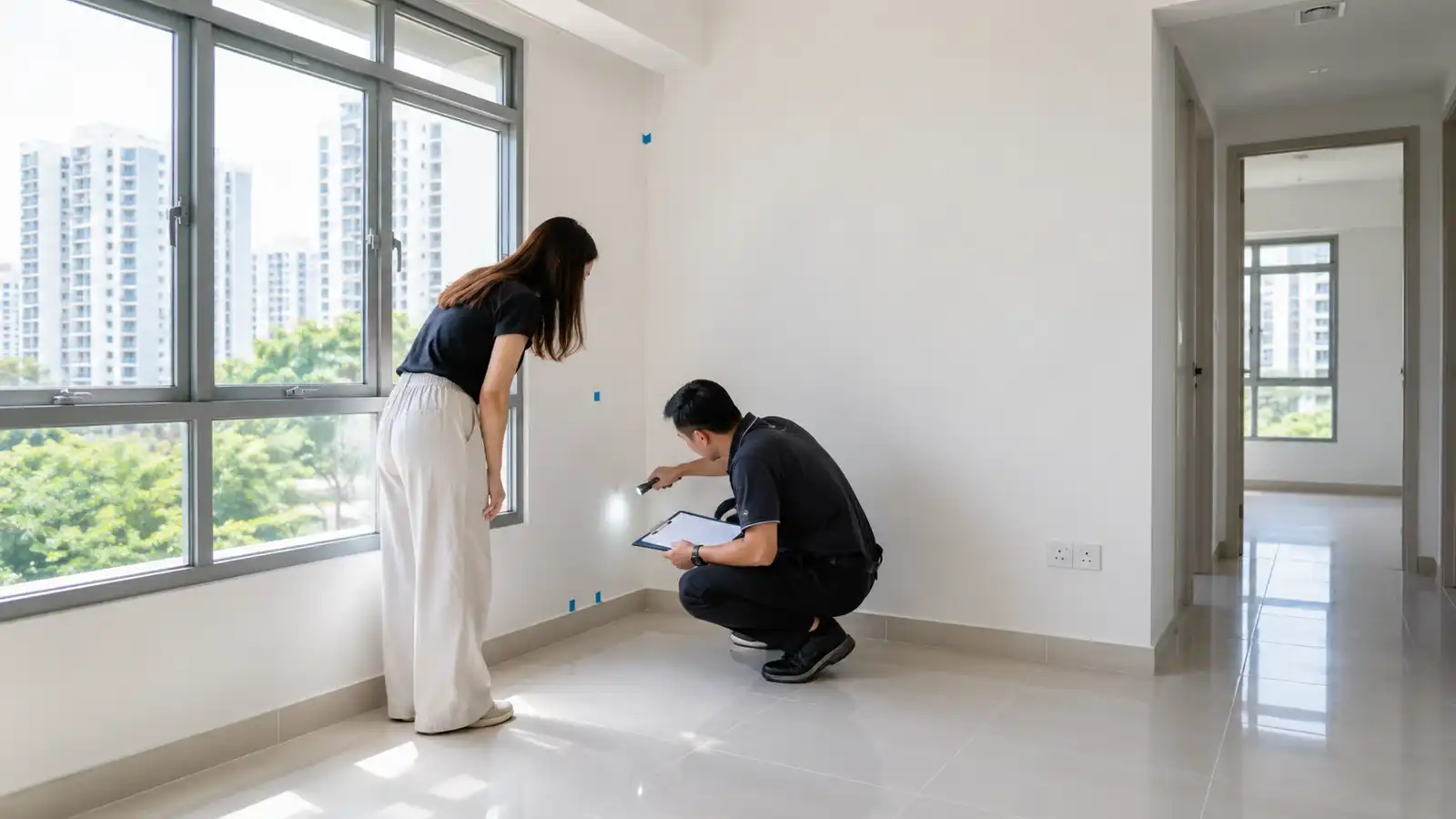
A practical responsibility guide for new HDB flat owners: what HDB and the Building Service Centre handle during the one-year DLP, what falls to renovation contractors and what owners manage later.
- DLP duration
- 1 year from key collection
- Best reporting time
- Within 1 month of key collection and before renovation
- During DLP
- BSC verifies reported items and assigns contractor(s) for rectification
- Typical HDB repair timing
- Usually less than 2 weeks
- After DLP
- Owner engages a repair contractor for internal flat issues
- Common property
- Contact the Town Council
A practical responsibility guide for new HDB flat owners: what HDB and the Building Service Centre handle during the one-year DLP, what falls to renovation contractors and what owners manage later.
Key Takeaways
- During the one-year DLP, report suspected inherent defects to the Building Service Centre; HDB's process includes a joint inspection and assigned rectification contractors.
- If damage appears after renovation begins, responsibility can depend on whether it was an original construction defect or caused by renovation work—one reason HDB advises reporting within one month and before renovation.
- After the DLP, owners are responsible for maintaining fittings and fixtures inside the flat, while Town Councils manage common property such as corridors, lifts and roofs.
Who fixes a defect during the one-year DLP?
For a newly completed HDB flat within its one-year Defects Liability Period, the first step is to report the issue to the Building Service Centre (BSC) or through HDB's online defect-reporting route.
HDB says the BSC will arrange a joint inspection to verify the reported item and then assign contractor(s) to carry out the rectification. A closing inspection follows after the work is completed.
Why HDB says to report within one month
The DLP lasts one year, but HDB advises owners to report items within one month of key collection and before renovation works begin. The reason is evidential: once renovation starts, it can become harder to establish whether damage was inherent in the flat or caused by later work.
The one-month advice does not replace the one-year DLP. It is about making responsibility easier to determine.
Who should you approach?
| Situation | Who to approach first | Why |
|---|---|---|
| Suspected inherent defect in a new flat during DLP | Building Service Centre / HDB reporting channel | BSC verifies the item and assigns rectification contractor(s) |
| Damage caused by renovation workmanship | Your renovation contractor | Renovation quality is a private contractual matter |
| Issue after the one-year DLP inside your flat | Your repair contractor; HDB Branch if further guidance is needed | Owners are responsible for maintaining internal fittings and fixtures after the DLP |
| Common property such as corridor, lift or roof | Town Council | Town Councils maintain common property |
What if the renovation contractor caused the damage?
If an issue is caused by your renovation contractor rather than the original flat construction, the dispute is between you and the contractor. HDB advises homeowners to agree clearly on pricing, work schedule and quality with renovation contractors.
If workmanship problems cannot be resolved with the contractor, HDB points owners toward options such as CASE, the Small Claims Tribunals or court proceedings depending on the dispute.
How long does HDB rectification usually take?
HDB says repairs usually take less than two weeks, although the actual time depends on the defect and work required. If renovation cannot wait, some rectification can be carried out during renovation when it does not hinder the works, or after renovation.
What changes after the one-year DLP?
After the DLP, HDB says homeowners are responsible for keeping fittings and fixtures in the flat in good condition. Owners can engage their own repair contractor, and can approach the HDB Branch for further assistance if needed.
This is different from common property: Town Councils control, manage and maintain areas such as corridors, void decks, lifts, water tanks, public lighting and open spaces.
What should you do before renovation starts?
- Complete a room-by-room inspection soon after key collection.
- Photograph each issue clearly before contractors enter the flat.
- Submit suspected construction defects promptly.
- Attend the BSC joint inspection where required.
- Keep defect reports and closing-inspection records.
Use our HDB Defects Inspection Checklist before works begin. If renovation is next, read our HDB Renovation Rules and HDB Air-Con Installation Rules.
Flat defect or common-property problem?
If the issue originates from common property, the responsible route can change. HDB states that Town Councils manage common property such as corridors, lifts and roofs. For example, a roof leak affecting a top-floor unit can involve the Town Council rather than the new-flat BSC process.
When the source is unclear, document the condition first and contact the appropriate HDB or Town Council channel rather than authorising invasive private repairs immediately.
Sources
Primary sources used for this guide: