HDB Window Maintenance Rules: 6-Month Checks, Contractors & Penalties
Check HDB windows every six months. This guide explains what to inspect, when to call an approved contractor, regulated window work and the penalties for unsafe windows.
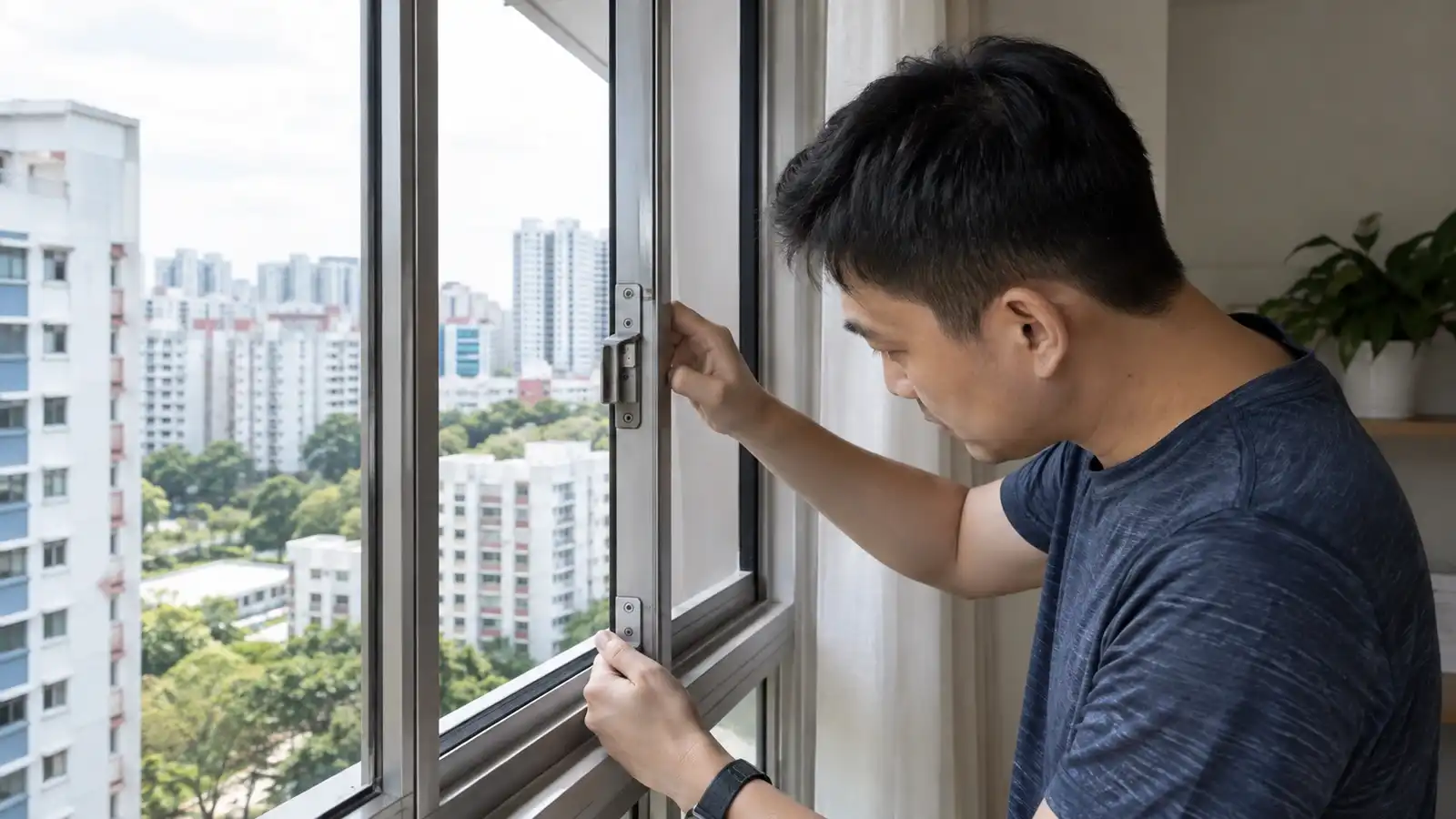
Check HDB windows every six months. This guide explains what to inspect, when to call an approved contractor, regulated window work and the penalties for unsafe windows.
- Check frequency
- Once every 6 months
- Owner responsibility
- Keep windows in safe working condition
- Repair contractor
- BCA-approved window contractor listed with HDB
- Key safety rule
- Secure any window that appears at risk of falling
- Falling-window penalty
- Fine up to S$20,000 and/or imprisonment up to 12 months
HDB windows are exposed to repeated use, rain and wind, so loose fasteners, worn hinges and damaged frames can become a serious falling-object risk. HDB advises homeowners to check their windows once every six months and arrange professional repair when something is loose, corroded or unsafe.
Key Takeaways
- Inspect HDB windows every six months for loose, worn, damaged or corroded parts.
- If a window is at risk of falling, secure it and engage a BCA-approved window contractor listed with HDB.
- A falling window caused by poor maintenance can lead to a fine up to S$20,000, imprisonment up to 12 months, or both.
Why does HDB recommend a six-month window check?
Window hardware gradually wears out. A hinge that was secure when installed can loosen after years of opening and closing, while rain and humidity can accelerate corrosion. A six-month check is intended to catch those problems before a panel becomes unstable.
A useful habit is to inspect all windows at the same time twice a year, including rarely used windows in service yards, bathrooms and bedrooms.
Use the Check, Clean, Change approach
HDB's maintenance guidance can be reduced to three practical actions: check for damage or looseness, clean tracks and moving parts so the window operates properly, and change worn components when necessary.
- Look for missing, loose or corroded screws, rivets and fasteners.
- Check whether hinges, stays and handles feel loose or unusually stiff.
- Make sure latches close securely and sliding panels remain properly seated in their tracks.
- Look for cracks, deformation or separation around the frame.
- Stop using a panel that wobbles, scrapes badly or appears capable of detaching.
What should you check on casement windows?
Casement windows depend heavily on hinges, stays and fasteners. Pay attention to corrosion, loose rivets and any movement between the window panel and its frame. HDB also maintains specific safety requirements for casement-window fasteners and retrofitting, so older windows should not be modified casually with non-compliant parts.
If you are unsure whether an older casement window meets the current safety requirements, ask an approved window contractor rather than attempting a DIY retrofit.
What should you check on sliding windows?
Sliding windows should move smoothly without feeling as though the panel is lifting out of the track. Clean debris from the tracks, check locks and catches, and watch for worn rollers, damaged guides or excessive side-to-side movement.
A panel that repeatedly jumps, jams or feels insecure should be inspected professionally.
Who can repair or replace HDB windows?
Regulated HDB window repair, replacement and retrofitting work must use a BCA-approved window contractor listed with HDB. This is not the same as hiring any general handyman.
The approved contractor handles the relevant permit or reporting requirements for regulated work. HDB's guidance also requires relevant window reports to be submitted to BCA after completion where applicable.
What should you do if a window looks like it may fall?
Do not keep opening or closing it to "test" the problem. Keep people away from the area below, secure the panel as safely as possible without leaning outside, and contact an approved contractor urgently. If there is an immediate danger to people below, treat it as a safety issue rather than a routine home-repair appointment.
What are the penalties for unsafe HDB windows?
If a window falls because of poor maintenance, HDB states that homeowners can face a fine of up to S$20,000, imprisonment of up to 12 months, or both. Separate penalties can apply for non-compliance with specific window-retrofitting requirements.
The purpose of the rules is not cosmetic maintenance; falling windows can seriously injure people at ground level.
Are ground-floor windows treated differently?
HDB notes that windows in flats at the lowest level are exempt from specific BCA Building Control Regulations because there is no falling-from-height risk. That does not mean damaged windows should be ignored — they still need to function safely and securely for the household.
HDB window maintenance FAQs
Do I need to hire a contractor every six months?
No. The six-month routine is a homeowner inspection. Hire an approved contractor when you find damage, unsafe movement or work that falls under regulated window repair, replacement or retrofitting.
Can I replace a full-height window whenever I want?
Not necessarily. HDB renovation rules restrict replacement of full-height windows except in approved situations, such as where a damaged frame requires complete replacement.
Can a normal handyman repair an HDB window?
For regulated window works, use a BCA-approved window contractor listed with HDB.
For larger works around the flat, also see our HDB Renovation Rules and HDB Air-Con Installation Rules.
Sources
Primary sources used for this guide: