Sands Theatre Seating Guide: Stalls, Dress Circle & Grand Circle Explained
Choosing a Sands Theatre seat is mostly a trade-off between closeness, elevation, whole-stage perspective and price. This practical guide explains the three main seating levels without pretending every production has the same sightlines.
Choosing a Sands Theatre seat is mostly a trade-off between closeness, elevation, whole-stage perspective and price. This practical guide explains the three main seating levels without pretending every production has the same sightlines.
- Ground level
- Stalls
- First elevated level
- Dress Circle
- Upper level
- Grand Circle
- Capacity
- About 2,155 seats across three levels
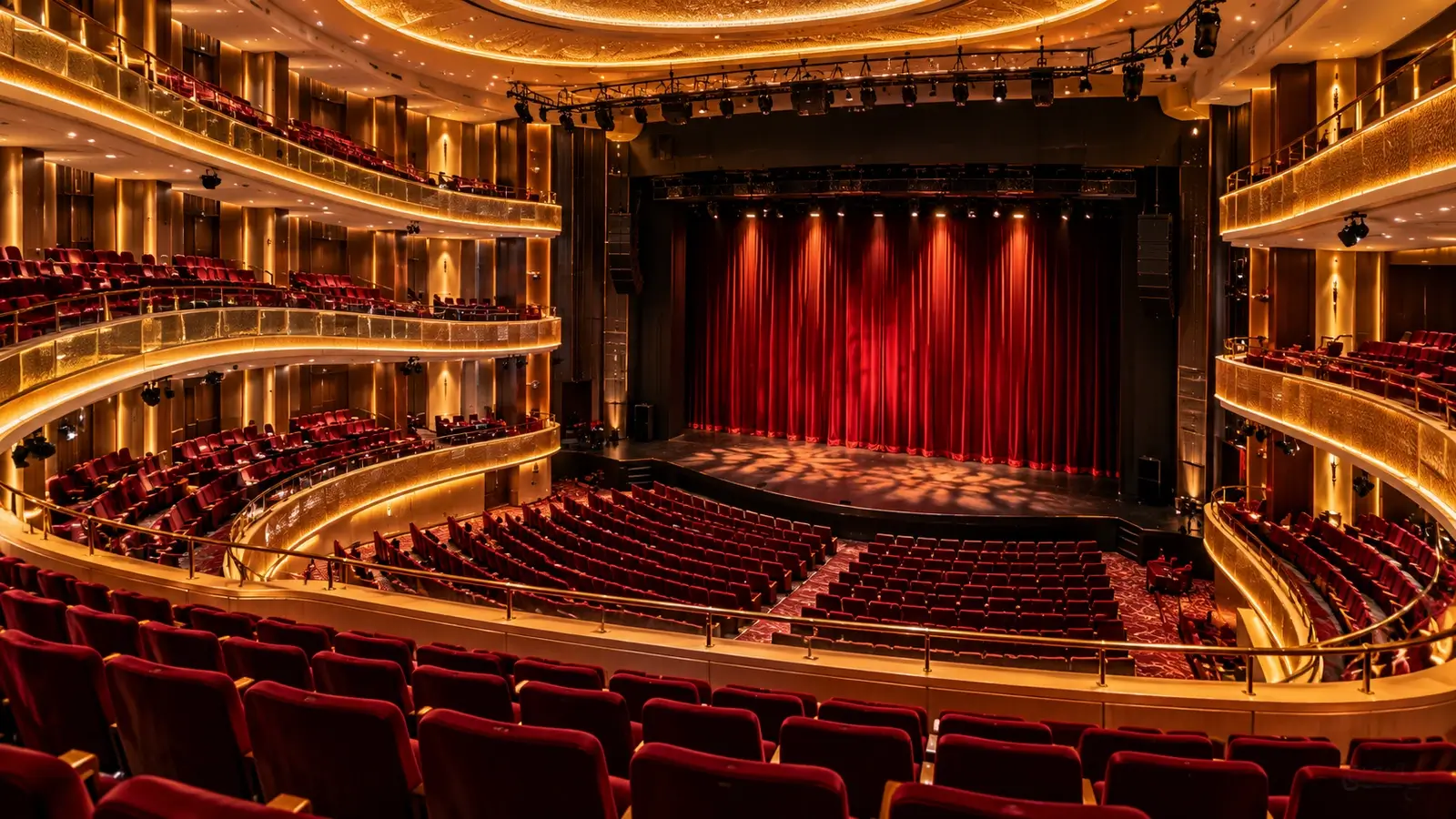
Sands Theatre seat labels are simple—Stalls, Dress Circle and Grand Circle—but choosing between them is not just a question of “nearer is better”. Musicals, concerts and stage spectaculars use the room differently. An immersive show can reward closeness, while choreography and large scenic pictures can be easier to appreciate from a modest elevation.
Key Takeaways
- Stalls are closest to the stage but the very front is not automatically the best value for every production.
- Dress Circle can balance elevation with proximity and often carries premium pricing.
- Grand Circle is farther away but can be the budget choice when a full-stage view matters more than facial detail.
How Sands Theatre is laid out
The theatre is arranged over three main seating levels. Stalls occupy the ground level. Dress Circle is the first elevated level, and Grand Circle sits above it. Marina Bay Sands publishes production-specific seat maps because the exact categories, boxes and unavailable seats can change from one event to another.
That is why a generic theatre map should be used to understand the room, not to predict the exact value of a seat for every show.
Stalls: best for closeness and immersion
Choose Stalls when your priority is being physically closer to performers and seeing expressions without relying as much on distance vision. Central seats usually provide a more balanced view than positions far to one side. The trade-off is that very close seats can make you look upward or move your attention around a large set more frequently.
For a production with a wide stage and ensemble choreography, stepping back several rows can sometimes create a more comfortable overall view than buying the closest available seat simply because it is expensive.
Dress Circle: useful whole-stage perspective
The first elevated level can be a strong compromise: you remain relatively close while gaining height that helps reveal formations, lighting patterns and scenic design. For productions where the full stage picture is a large part of the appeal, this perspective can be worth comparing with similarly priced Stalls seats.
Do not assume every Dress Circle seat is superior to every Stalls seat. Side angle, distance from centre and the production’s staging still matter. Compare the specific seat map shown for your performance.
Grand Circle: budget and overview
Grand Circle places you farther from the stage. The advantage is often price and an easy overview of the production. The disadvantage is reduced facial detail and a greater sense of distance. For first-time theatre-goers who mainly want to experience a major musical at the lowest official category, this can still be a rational choice.
For CATS, Marina Bay Sands currently lists D Reserve Grand Circle at S$68–S$88 before booking fees, compared with higher categories closer to the stage. That makes the upper level relevant to budget-conscious audiences rather than a section to dismiss automatically.
What about boxes and restricted views?
Boxes can provide privacy or a distinctive angle, but they should not be treated as automatically “VIP view” seats. A box can be more lateral than a central conventional seat. If the booking page labels a seat restricted or partially restricted, take that warning seriously and compare the price against an unrestricted seat elsewhere.
Production-specific staging can also block or open sections. Always use the live seat map for the date you are actually buying.
Using CATS as a current example
CATS Singapore 2026 runs from 29 October to 22 November and publishes categories across Stalls, Dress Circle, Grand Circle and boxes. It is a useful example of why the same theatre can support several legitimate “best seat” answers: someone prioritising immersion, someone wanting whole-stage choreography and someone watching budget may all choose differently.
Before you pay
- Open the seat map for your exact performance, not a saved screenshot from another show.
- Compare centrality as well as distance from the stage.
- Check whether your category is dynamically priced.
- Read any restricted-view or accessibility note before checkout.
- Allow enough arrival time that you do not miss the opening because late seating may be controlled.
Sources
Primary or official sources used for this guide: